734-522-3229
We Put The Joy In Your Journey
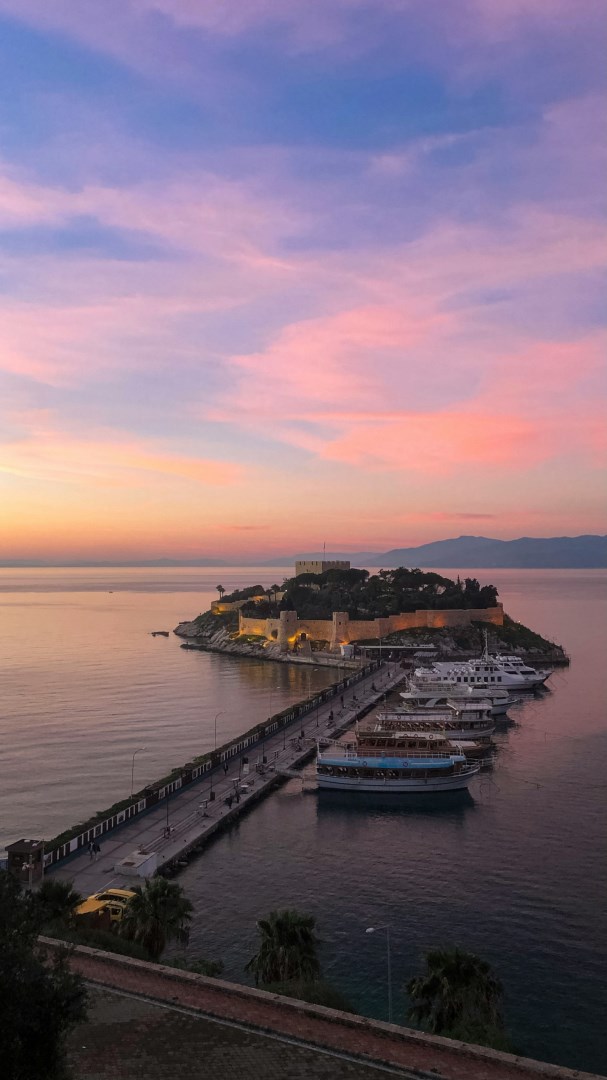
Kuşadası is a seaside city on Türkiye’s Aegean coast, set around a broad bay with beaches, a marina, and a busy harbor. Its location places it close to several major archaeological sites, including Ephesus, making it an important base for exploring the cultural landscape of western Anatolia. The city itself combines waterfront districts with the narrow streets of Kaleiçi, where shops, cafés, and restaurants occupy traditional buildings. Güvercinada, a small island linked to the shore, gives Kuşadası its name and remains one of its most recognizable landmarks.
Kuşadası reflects layers of Anatolian, Greek, Roman, Byzantine, and Ottoman heritage. Its historic center developed around defensive walls, gates, and the Öküz Mehmet Paşa Caravanserai, which served travelers and merchants moving through the region. Güvercinada Castle also reflects the city’s long strategic role along the Aegean coast, with its defenses later renewed during the Ottoman period. Nearby Ephesus adds another important cultural dimension, preserving monuments such as the Library of Celsus, the Great Theatre, and the Terrace Houses. The area also has strong connections with early Christian pilgrimage through the nearby House of the Virgin Mary.
The coast provides a range of landscapes, from sandy beaches and sheltered coves to wooded hills and protected wetlands. Dilek Peninsula–Büyük Menderes Delta National Park lies south of the city and contains forested slopes, secluded bays, walking routes, and diverse birdlife. The park is also known for the Cave of Zeus and several beaches along its coastline. Within Kuşadası, Güvercinada offers views across the bay, while Yılancı Burnu provides another coastal setting close to the historic center. Ephesus, near Selçuk, is a UNESCO World Heritage Site and one of the region’s most important archaeological destinations.
Kuşadası’s food reflects the Aegean tradition of olive oil, fresh vegetables, seafood, herbs, and locally grown fruit. Fish restaurants commonly serve freshly caught seafood with small plates of meze, while village breakfasts feature regional produce, homemade jams, and other simple dishes. The wider Aydın region is especially associated with olives, figs, and grapes, all of which appear in local cuisine. Traditional sweets found in the area include semolina halva, lokma, rice pudding, and pelvize, a walnut-and-clove pudding. Olive oil production remains an important part of the surrounding agricultural landscape and local food identity.